
Tooth spacing irregularity
Clear aligners for spaced front teeth | Adjusting both spaces and bite with Invisalign Moderate
Tooth spacing irregularity · MIND Orthodontic Clinic
For spaced front teeth, is closing the spaces all that orthodontic treatment involves?
A gap between the front teeth can bother you when smiling or speaking. This is called diastema, or spacing between teeth. A space specifically between the upper central incisors is called a midline diastema.
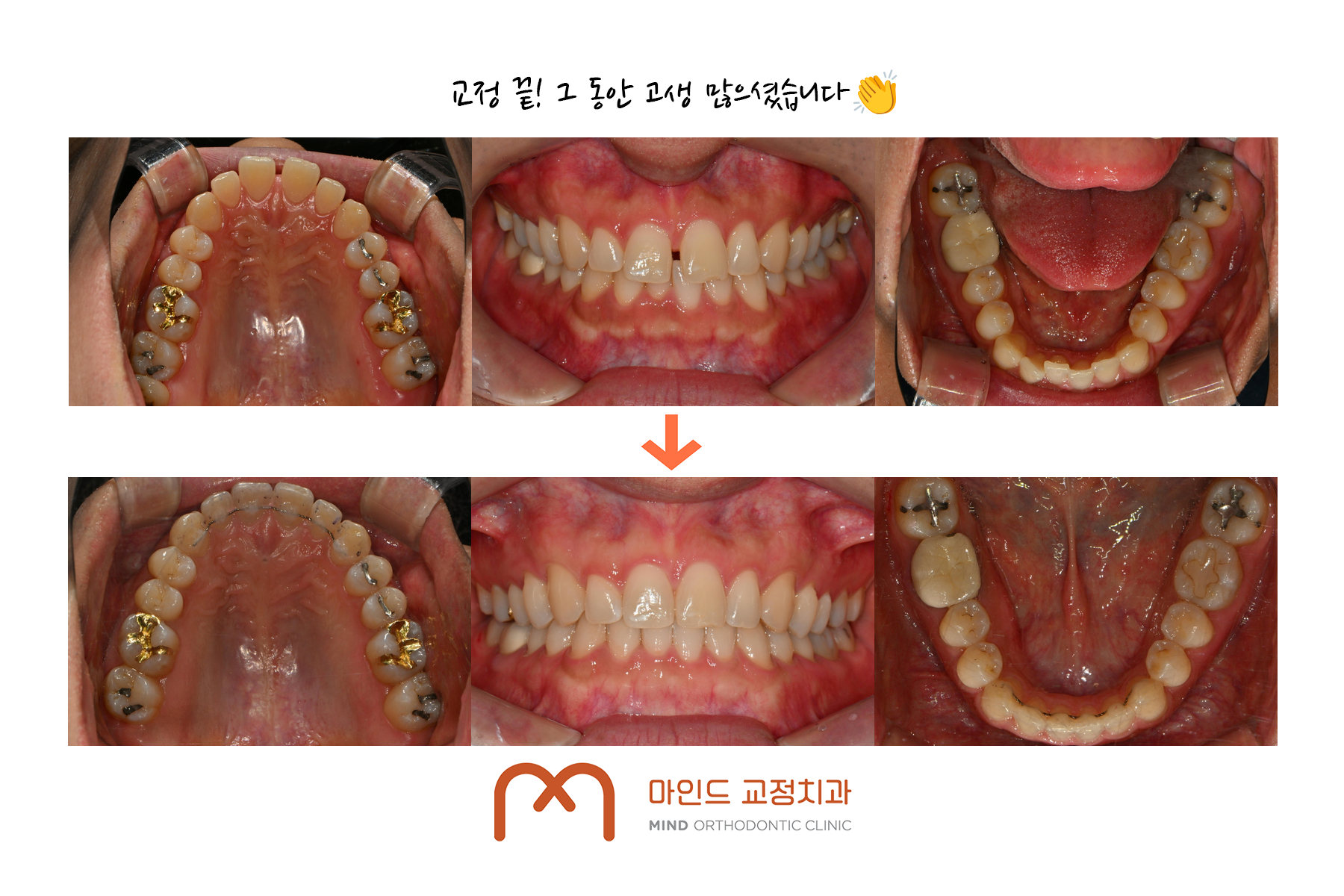
The patient we introduce today also visited Mind Orthodontic Clinic in Ansan to improve spaces between the front teeth. However, other factors needed to be considered when planning treatment. The upper front teeth had spaces, but the lower front teeth overlapped, and the anterior bite was deep and tight.
Here, we show how Invisalign Moderate was used to close anterior spaces while also adjusting lower tooth alignment and a deep bite.
Key points of this article
- When treating anterior spacing, both its cause and how the upper and lower teeth bite together must be assessed.
- In this case, we used interproximal reduction, Precision Bite Ramps, and Class III elastics.
- Invisalign can be used for deep bite treatment, but actual bite changes and post-treatment retention must also be checked.
Clinical case | Upper anterior spacing and lower crowding were treated together
- Reason for visiting
- Improving spaces between the front teeth
- Conditions considered together
- Lower dental crowding, deep bite, and tight anterior occlusion
- Orthodontic appliance
- Invisalign Moderate
- Additional methods used
- Interproximal reduction (IPR), Precision Bite Ramps, Class III elastics
- Start of treatment
- 2025.08.14
- End of treatment
- 2026.09.09
- Treatment Duration
- 1 year 26 days, about 13 months
- Retention after treatment
- Fixed retainers and a removable retainer with an anterior bite plane on the upper retainer
Appearance at the initial visit
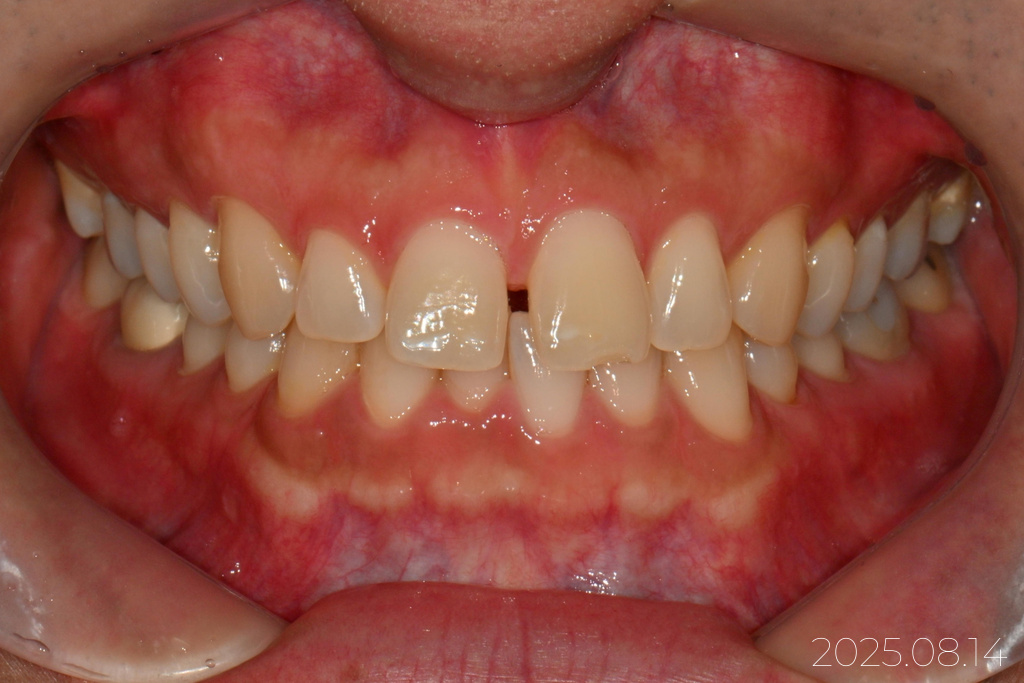
There were spaces between the upper front teeth. This was the patient's main concern.
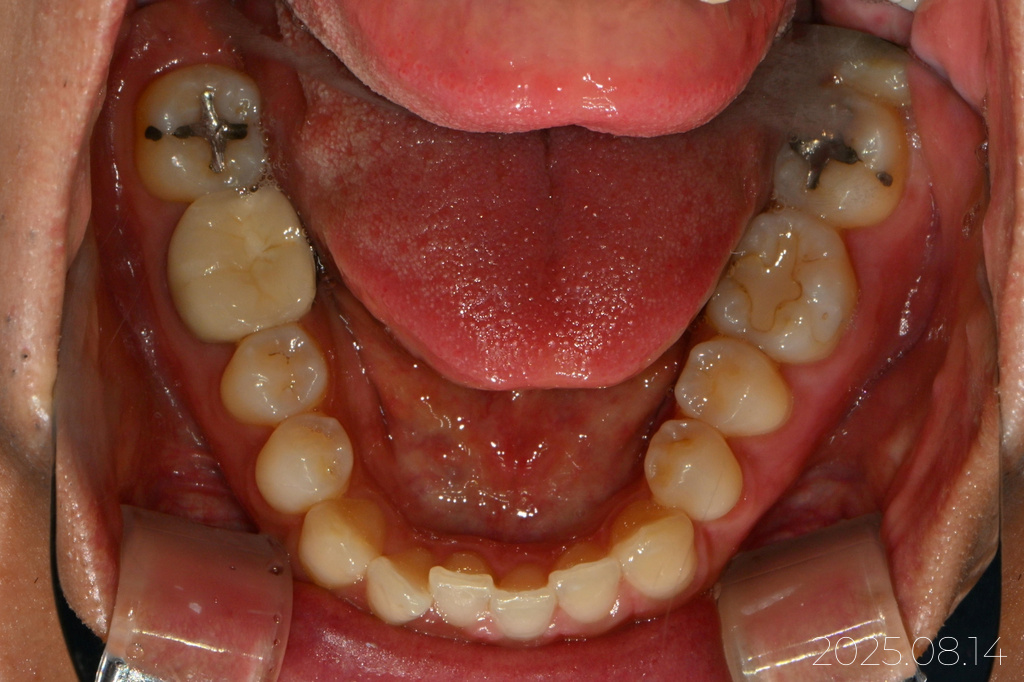
The lower teeth were different. There was crowding, with overlapping front teeth because of insufficient alignment space. In addition, the deep bite caused tight contact between the upper and lower front teeth, so we had to keep checking the relationship with the lower arch while closing the upper anterior spaces.
Why space closure and bite adjustment were performed together
For this treatment, we planned both to close the upper anterior spaces and to align the lower teeth. To relieve lower crowding, we performed interproximal reduction, or IPR, which creates space by carefully reducing the surfaces between teeth as needed.
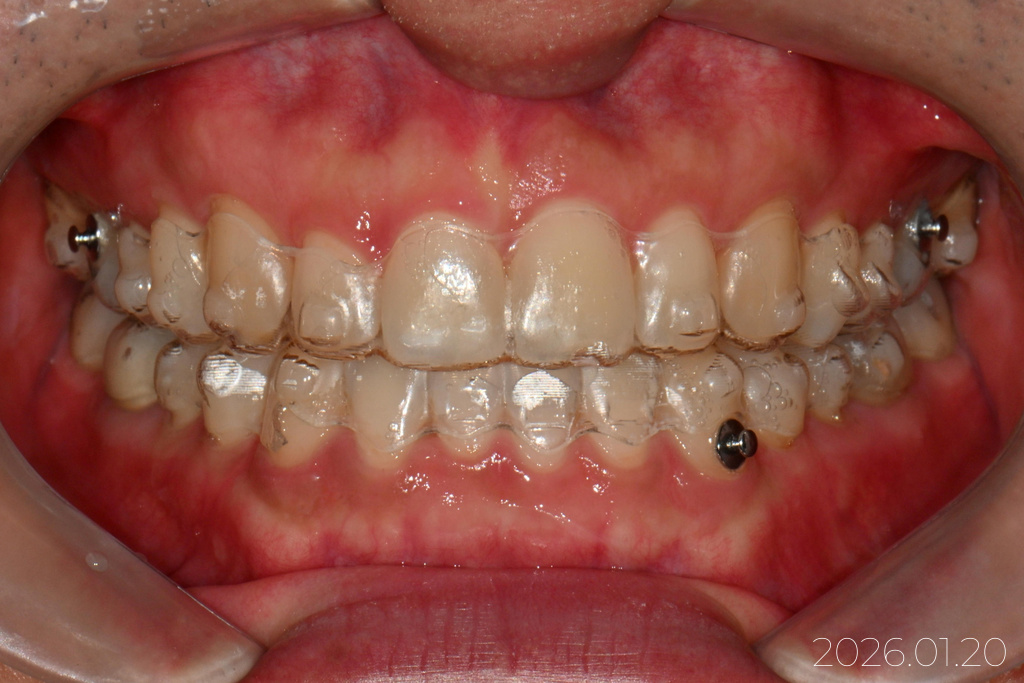
Precision Bite Ramps were also used to adjust the deep bite. As anterior occlusion remained tight during space closure, treatment proceeded with Class III elastics.
Elastics were used in this case to adjust how the upper and lower arches bite together during anterior space closure. This aspect is easily overlooked if we focus only on the spaced teeth.
Changes after treatment
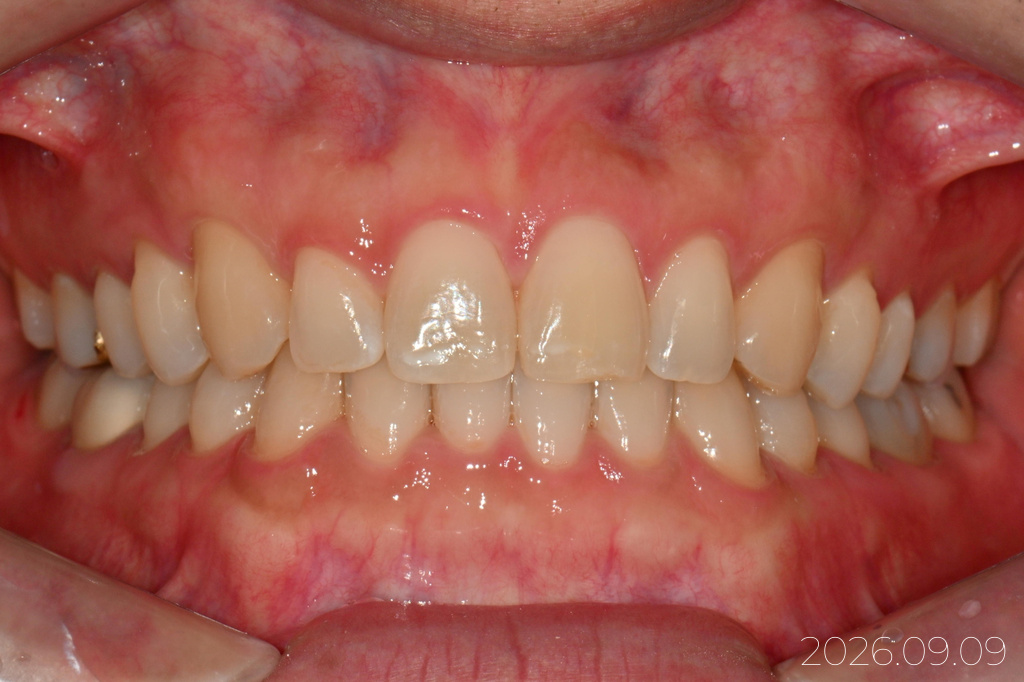
Treatment began on August 14, 2025 and ended on September 9, 2026. It took about 13 months.
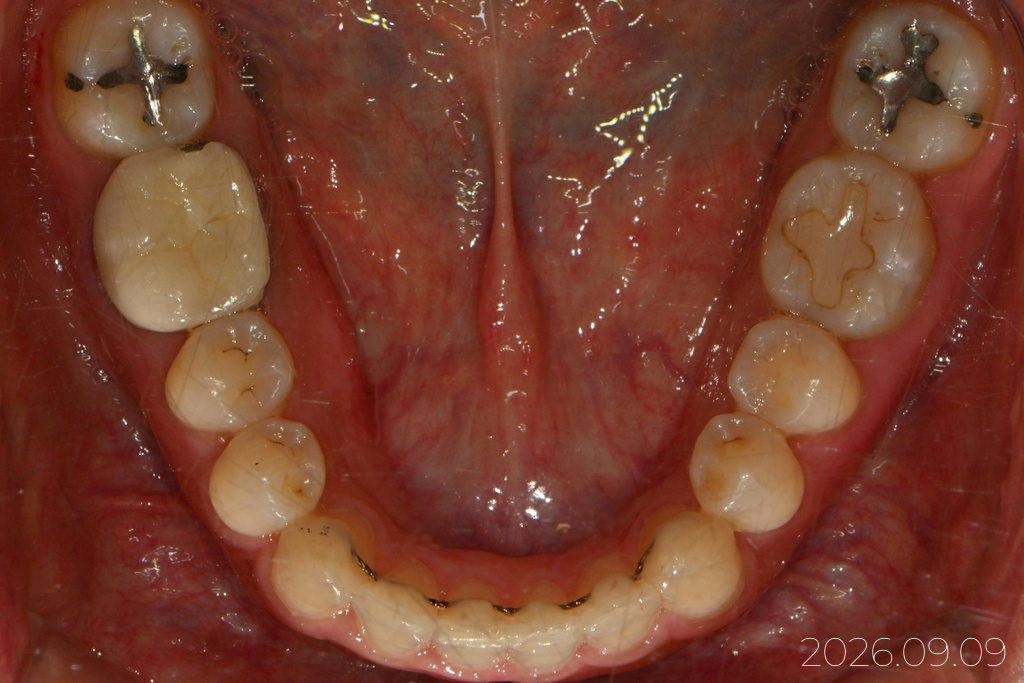
After treatment, the spaces between the upper front teeth were closed, and the lower front teeth were aligned. Along with closing the anterior spaces, we also paid attention to adjusting how the upper and lower teeth bite together.
Fixed retainers were used after treatment. In addition, a removable upper retainer with an anterior bite plane was used to help prevent the deep bite from worsening again. This appliance was designed with a plane where the front teeth contact to manage their deep overlap.
This treatment was planned not just to close the upper anterior gaps, but also to adjust the lower arch and bite and maintain that condition.
What should be considered when treating diastema orthodontically?
It is important to plan for the cause of the spacing, the relationship between the upper and lower teeth, and retention after treatment together.
First, we need to identify why the spaces developed
Anterior spaces have various causes. Factors to assess include the relationship between tooth size and arch space, tooth shape or missing teeth, lip and tongue function, and the frenum. Literature on diastema also emphasizes accurate diagnosis of the cause and selection of appropriate treatment.
That is why treatment plans can differ even for similar anterior spacing. The direction of tooth movement, how much space to close, and the size and alignment relationships with other teeth must be assessed first. Tooth-size analysis and radiographic examinations may help with diagnosis.
For this patient, lower crowding and deep bite were considered alongside the upper anterior spaces. Spaces between the upper teeth did not mean there was also spare room in the lower arch.
Checking the relationship with the lower teeth during space closure
A particular focus in this case was the tight anterior bite. We had to keep checking how upper anterior space closure and lower anterior alignment affected each other.
We therefore performed IPR in the lower arch and used Precision Bite Ramps together with Class III elastics. This plan was tailored to this patient's condition; not every patient with anterior spacing needs the same methods.
Managing spaces to keep them from reopening after treatment
Spaces between the front teeth can reopen after orthodontic closure. A follow-up study of patients whose upper anterior spaces had been closed orthodontically also observed recurrence of midline diastema. Initial space size and changes in the horizontal relationship of the front teeth after treatment were associated with recurrence.
We therefore consider retention planning as important as the appearance of closed spaces. Here, we used fixed retainers plus a removable retainer to manage the deep bite. Retention was tailored to the original alignment and post-treatment bite, with later checks planned to assess both spacing and occlusion.
Does Invisalign have advantages for deep bite treatment?
It has advantages that can be used in deep bite treatment. However, we cannot conclude that it corrects every case better than brackets.
Bite ramps can be used to adjust the bite
A deep bite means that the upper front teeth deeply overlap the lower front teeth. Treatment is planned according to the condition and may include intrusion, which moves the front teeth toward their roots, or adjustment of tooth inclination and molar height.
Invisalign can incorporate designs that support this treatment. One is Precision Bite Ramps built into the aligner behind the upper front teeth. They are designed for the lower front teeth to contact them, temporarily separating the molar contacts and supporting the planned bite changes.
With bonded brackets, deeply overlapping front teeth can interfere with the opposing brackets and limit treatment. Invisalign offers the advantage of planning alignment and deep bite adjustment together while avoiding such bracket interference.
Precision Bite Ramps were also used for this patient. Class III elastics were used alongside them to close the spaces while checking the actual anterior bite.
What did studies show in comparison with brackets?
A retrospective study comparing Invisalign with fixed appliances in 50 adults with deep bite found both methods effective. There were no significant differences between groups in total treatment duration or the occlusal assessment scores used in the study. However, as it was retrospective, caution is needed when applying the findings to all patients.
Another study compared Invisalign G5 treatment incorporating bite ramps with fixed appliances. Deep bite improved in both groups, but the fixed appliance group had a greater average reduction in vertical anterior overlap. This shows that Invisalign with bite ramps does not always produce a larger corrective effect.
The treatment plan display and actual tooth movement may differ
With clear aligners, you can preview tooth movement on the treatment planning screen. However, not all teeth actually move as much as planned.
In a study of 24 patients with deep bite, the reduction in vertical anterior overlap achieved after the first set of aligners averaged about 33% of the planned amount. This does not mean that treatment had a 33% success rate; it indicates how much of the planned bite change was achieved with the first set. The researchers noted the need for additional adjustments and aligner remakes.
Therefore, when I treat deep bite with Invisalign, I focus on how the actual bite changes as well as on appliance features. This case also involved adjusting both spaces and occlusion using bite ramps and elastics.
The studies above concern Invisalign treatment; they did not separately verify the effects of the Moderate package alone. It is helpful to distinguish the fact that Moderate was used in this case from the general advantages and limitations identified in research.
Frequently asked questions
Q. Only my upper front teeth have spaces. Do the lower teeth need treatment too?
A. It depends on lower tooth alignment and the upper-lower bite. This patient had both lower crowding and tight anterior occlusion, so the lower arch was treated as well. Rather than deciding the treatment scope from the upper spaces alone, we must check how both arches bite together.
Q. How long does it take to close anterior spaces with Invisalign?
A. This case took about 13 months. However, that period included not only anterior space closure but also adjustment of lower crowding and occlusion. The expected duration for other patients depends on the amount of spacing and the problems that need correction together.
Q. Are retainers needed even after the spaces close?
A. Diastema can recur after treatment, so retention must also be planned. Here, fixed retainers and a removable retainer with an anterior bite plane on the upper retainer were used to manage both anterior spacing and deep overlap.
Closing remarks
Even a small visible gap between the front teeth involves more treatment considerations than one might expect. For this patient, we needed to close the upper anterior spaces, resolve lower crowding, and adjust the persistently tight anterior bite together.
Invisalign Moderate was used with interproximal reduction, Precision Bite Ramps, and Class III elastics, with post-treatment retention planned as well.
When treating anterior spacing, we must examine not only visible gaps but also how the upper and lower teeth bite together. It is important to consider why the spaces developed, how to adjust the bite during closure, and how to maintain the results afterward.
The treatment duration and changes described are this patient's results and may vary with the individual's initial condition and treatment plan.
References
- Huang WJ, Creath CJ. The midline diastema: a review of its etiology and treatment. Pediatric Dentistry. 1995;17(3):171–179.
- Morais JF, Freitas MR, Freitas KMS, Janson G, Castello Branco N. Postretention stability after orthodontic closure of maxillary interincisor diastemas. Journal of Applied Oral Science. 2014;22(5):409–415. doi:10.1590/1678-775720130472
- Henick D, Dayan W, Dunford R, Warunek S, Al-Jewair T. Effects of Invisalign (G5) with virtual bite ramps for skeletal deep overbite malocclusion correction in adults. The Angle Orthodontist. 2021;91(2):164–170. doi:10.2319/072220-646.1
- Fujiyama K, et al. Comparison of clinical outcomes between Invisalign and conventional fixed appliance therapies in adult patients with severe deep overbite treated with nonextraction. American Journal of Orthodontics and Dentofacial Orthopedics. 2022;161(4):542–547. doi:10.1016/j.ajodo.2020.08.023
- Shahabuddin N, Kang J, Jeon HH. Predictability of the deep overbite correction using clear aligners. American Journal of Orthodontics and Dentofacial Orthopedics. 2023;163(6):793–801. doi:10.1016/j.ajodo.2022.07.019
- The people shown in the before-and-after photos are the same person.
- Photographed under the same conditions, including location and lighting.
- Treatment results may vary by individual.
- These are actual treatment cases of patients treated at this medical institution.
- The timing of the before-and-after photos is stated, and no separate retouching was performed.
Orthodontic consultation—feel free to ask us
After a precise examination, we will explain a treatment plan suited to your individual needs.